How to Run an Auto Repair Workshop in 2026: The Complete Digital Playbook
A stage-by-stage playbook for running a modern auto workshop — from the first booking to the final VAT invoice — with the exact digital workflow that gets cars out faster and stops revenue quietly leaking.
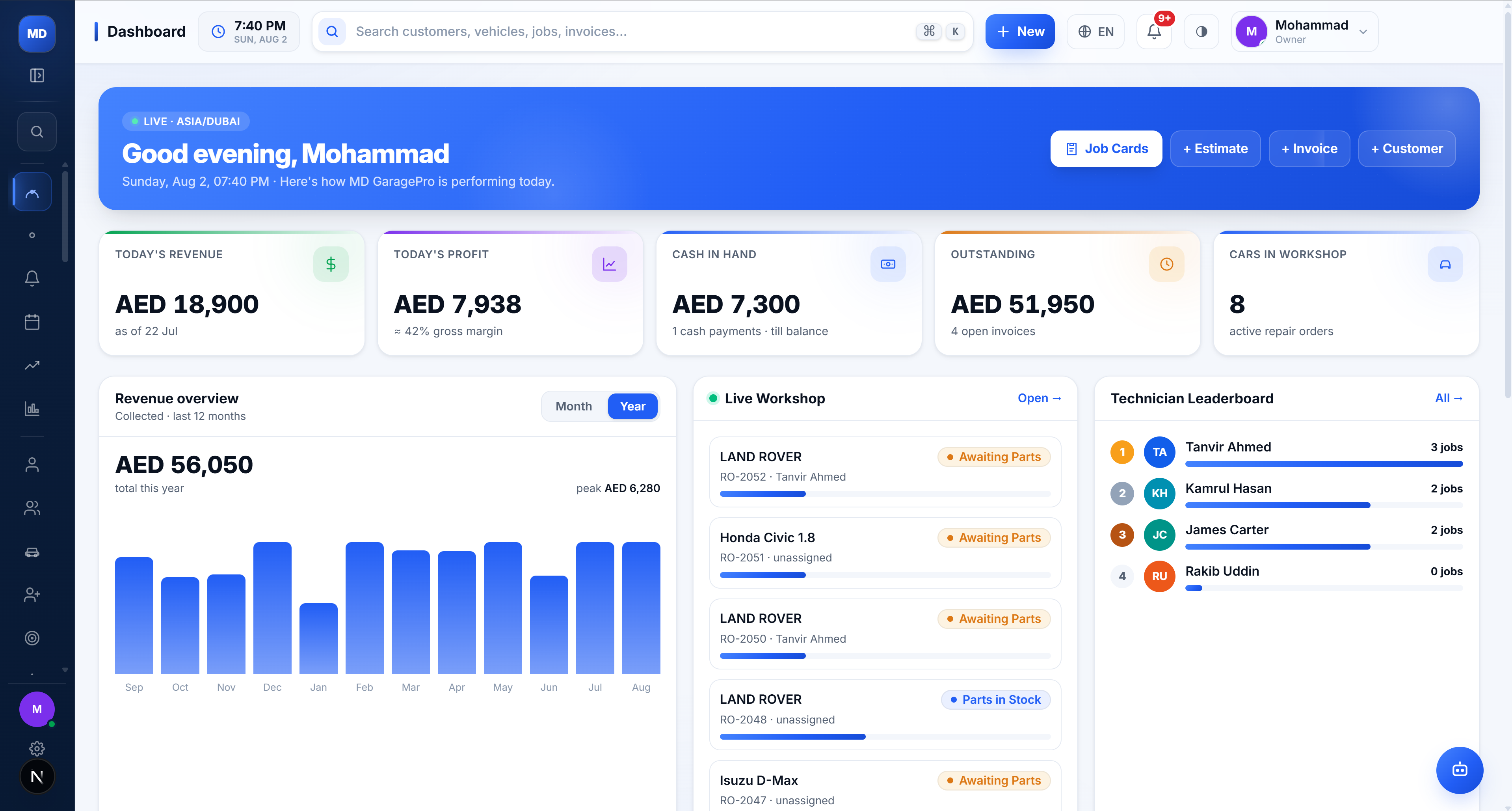
Walk into a busy auto workshop at 8 a.m. and you can usually tell within five minutes whether the day will run smoothly or come apart. The signs are small: a whiteboard with half-rubbed-out plate numbers, a service advisor holding three paper job cards and a ringing phone, a technician standing idle because nobody can say whether the customer approved the brake work. None of it looks dramatic. It just quietly costs you cars, hours and margin — every single day.
This is a practical playbook for how a workshop actually runs in 2026: what happens at each stage, where the day usually leaks, and how a connected system closes the gaps. We use MD GaragePro to show each step, but the workflow is the same whether you run a single bay in Sharjah or twelve across the Emirates. If you want the wider market view first, our UAE buyer's guide covers what to look for before you buy.
The real problem isn't your team — it's the handoffs
Most workshop chaos isn't caused by lazy staff or bad technicians. It's caused by handoffs. A job passes from the front desk to the service advisor, to the technician, to parts, and finally to whoever raises the invoice. Every one of those handoffs happens on paper, over a shout across the workshop, or in a WhatsApp thread — and every one loses a little information. A part gets fitted but never makes the invoice. An approval is given verbally and forgotten. A car sits in the bay because the estimate is still 'with the customer'.
The fix isn't working harder. It's putting the whole journey in one place so nothing has to be re-entered, re-explained or chased. When every stage writes to the same record, the leaks close on their own.
Stage 1 — Booking and intake, done in seconds
The journey starts before the car arrives. A booking comes in by phone, as a walk-in, or through your online booking portal, and the vehicle and customer are captured once — not scribbled on a pad to be typed up later. If the customer has been in before, their full history is already attached; if not, you register the vehicle and its details stay linked to every future visit.
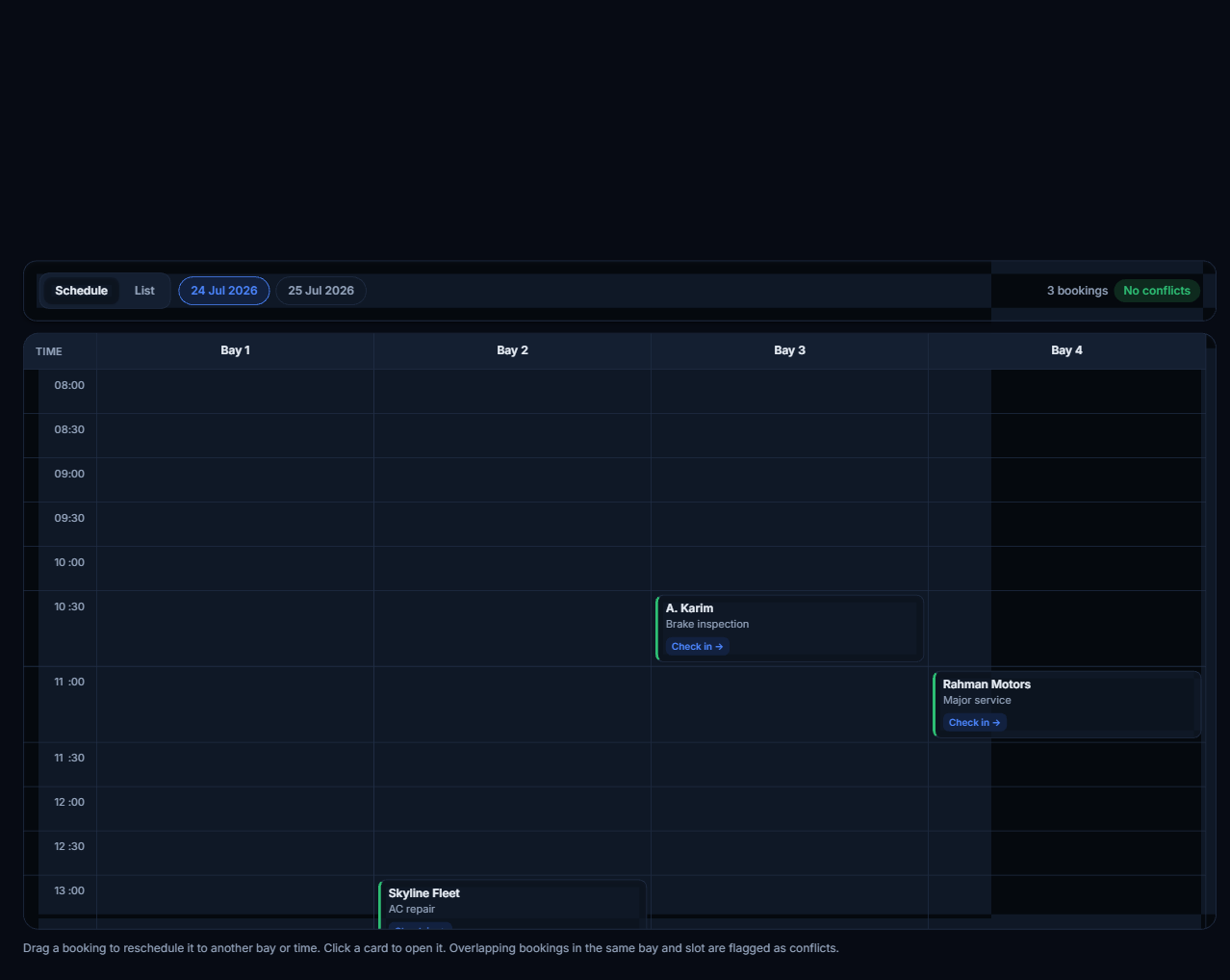
This is also where good data discipline pays off later. Because the customer, vehicle and service are recorded properly at intake, everything downstream — the job card, the inspection, the invoice — inherits that information instead of asking someone to type it again.
Stage 2 — The digital job card that never gets lost
The job card is the spine of the whole repair. In most shops it's a piece of paper that rides around on the dashboard and, often enough, disappears. Replace it with a live digital board and the single biggest change most workshops feel in the first week is simply this: nobody has to ask where a car is anymore. You can see it.
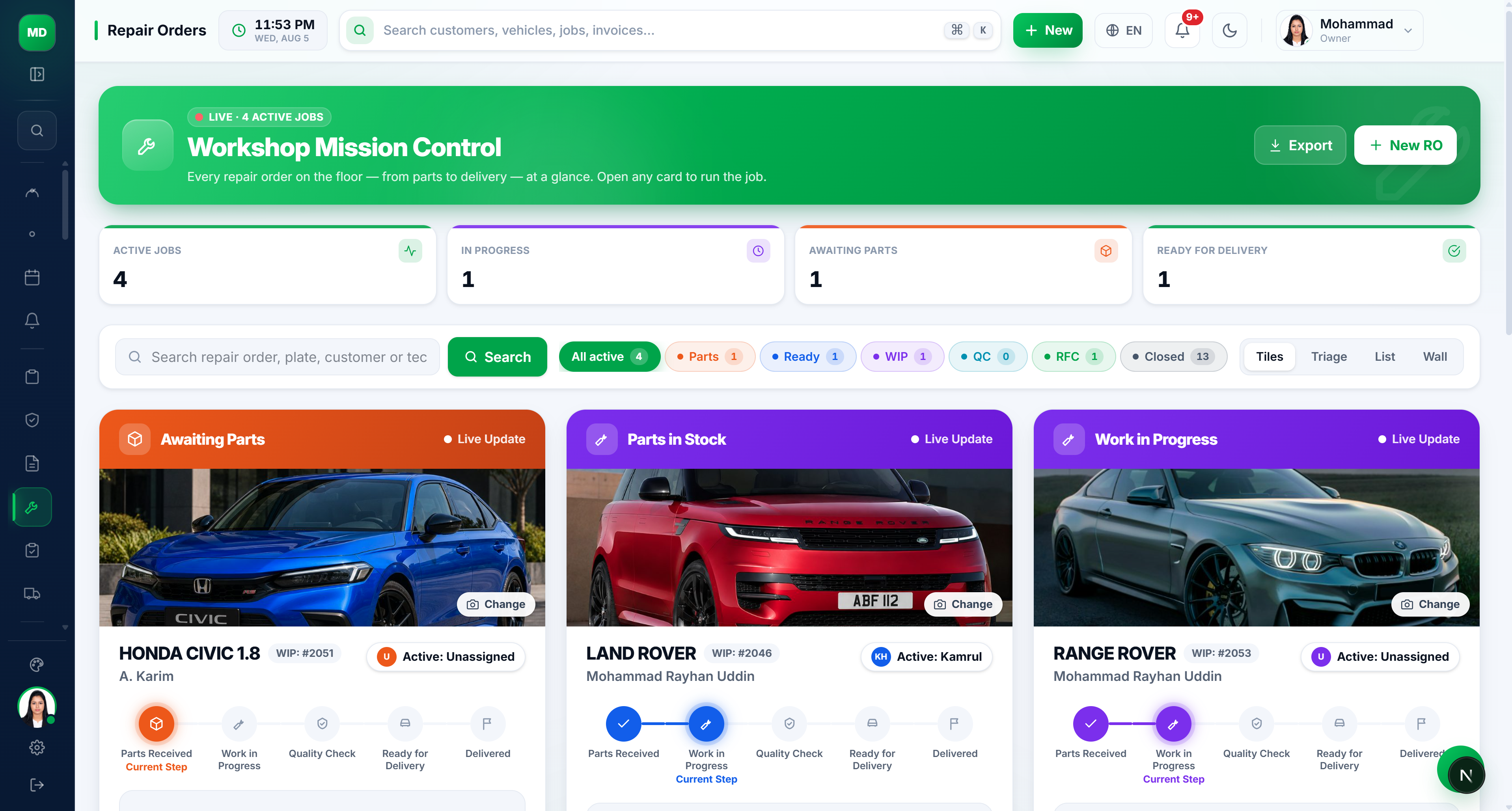
A live board does three things a whiteboard never could:
- It shows every car's exact stage — booked, in inspection, awaiting approval, in repair, QC, ready — at a glance.
- It assigns and tracks technicians, so work is balanced and nothing sits idle.
- It keeps a permanent record, so a job card can never be lost, smudged or duplicated.
Stage 3 — Inspections that sell the work for you
Here's where more revenue is won or lost than almost anywhere else. A technician runs a digital vehicle inspection (DVI), flags each item red, amber or green, and attaches photos of exactly what they found. That inspection goes straight to the customer's phone. The difference in approvals is not subtle — we've watched a AED 90 cabin-filter change get approved in seconds, simply because the customer could see the photo instead of being asked to trust a phone call.
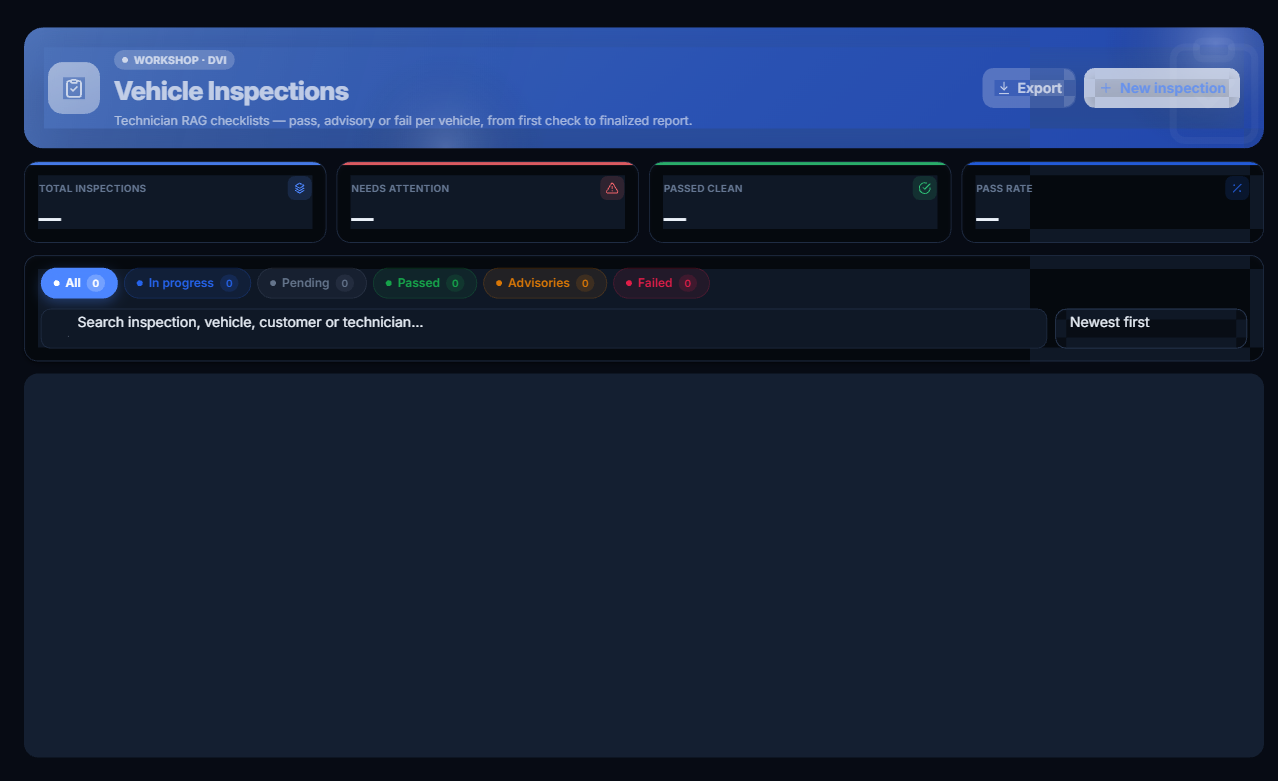
If you only digitise one thing this year, make it inspections. We go deep on why they build trust and lift approval rates in how digital inspections win customer trust.
Stage 4 — Estimates approved from the customer's phone
An inspection becomes an estimate in a click. The customer opens it on their phone, approves or declines each line, and signs digitally. That single change collapses the slowest part of most repairs — the wait for a yes. Instead of chasing an approval over WhatsApp for a day and a half while the bay sits occupied, you get a line-by-line decision and a signature, with a full audit trail of who approved what and when.
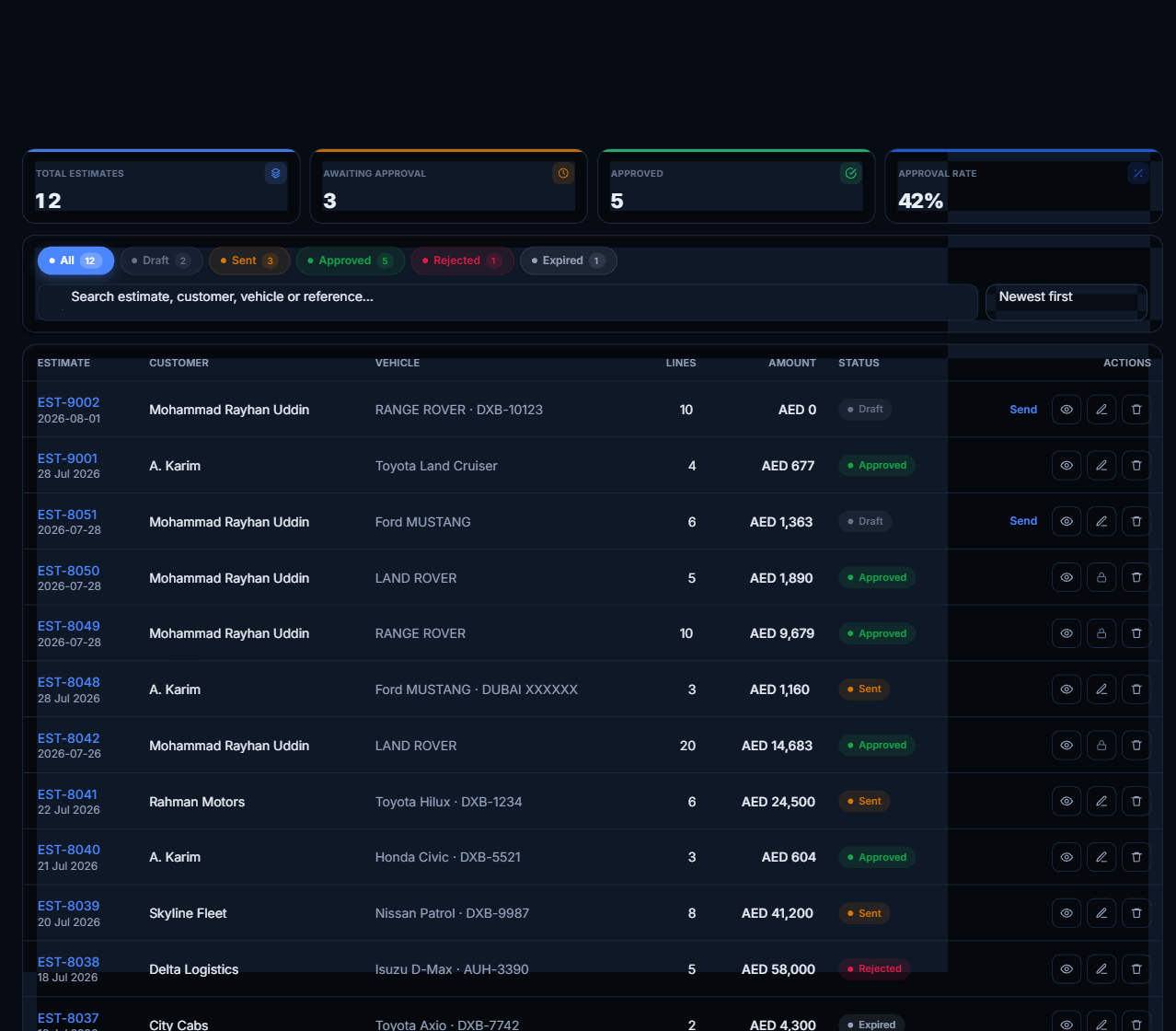
“We cut our approval time from two days to under an hour. Cars move through the workshop far faster now.”
— Workshop owner, Dubai
Stage 5 — The repair order: parts, labour and true cost
Once work is approved, it becomes a repair order. Parts are reserved against the job, technicians clock in and out, and the cost of the repair builds up live as it happens — so you're never guessing your margin at the end. This is the stage where a paper shop leaks the most quietly: a part gets fitted, an extra half-hour of labour goes in, and neither ever reaches the invoice. When the repair order captures them automatically, they simply can't fall off.

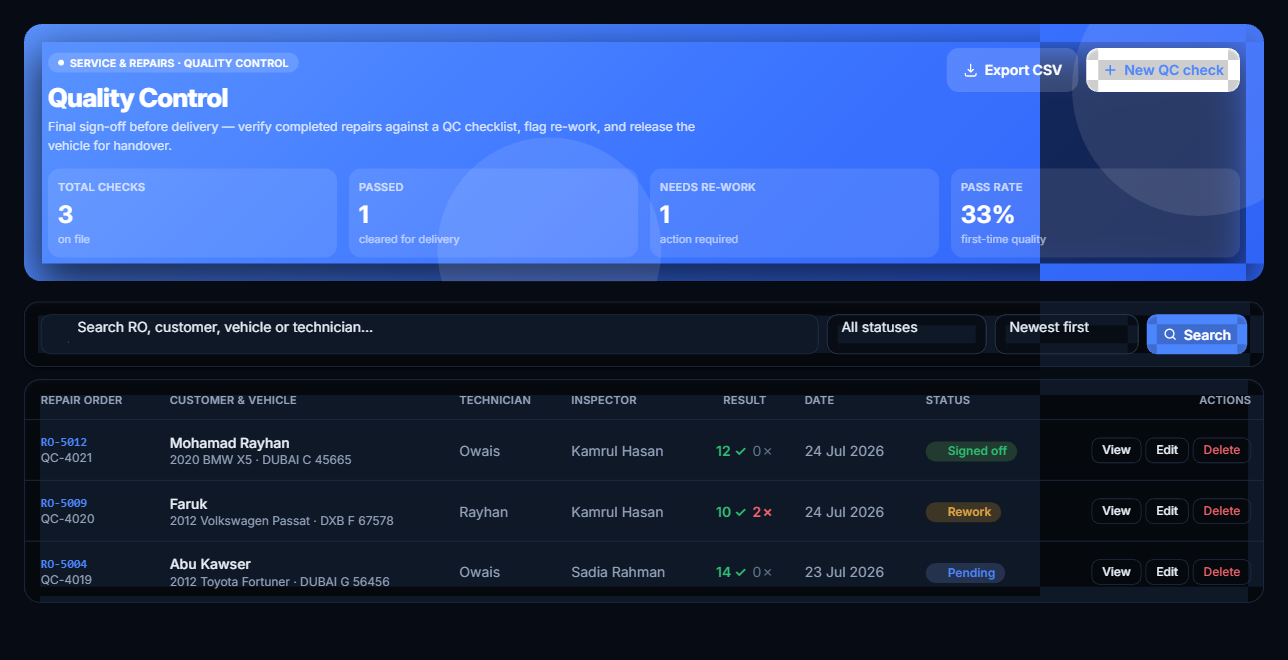
Stage 6 — Quality control before the keys go back
The fastest way to lose a customer you just earned is a comeback — a car returned for something that should have been caught. A simple quality-control gate every vehicle passes before hand-over turns that from luck into process: the torque check, the road test, the warning light that's actually cleared. It costs a few minutes and protects the reputation you spent years building.
Stage 7 — The VAT invoice, straight from the job
By the time the car is ready, the invoice should already be 90% written — because every approved part and labour hour has been flowing into it the whole time. You bill directly from the repair order in one step, VAT is calculated at 5%, your TRN is on the document, and the numbers are correct because nobody re-typed them. For a UAE workshop, that combination — accurate and audit-ready without extra effort — is the whole point.
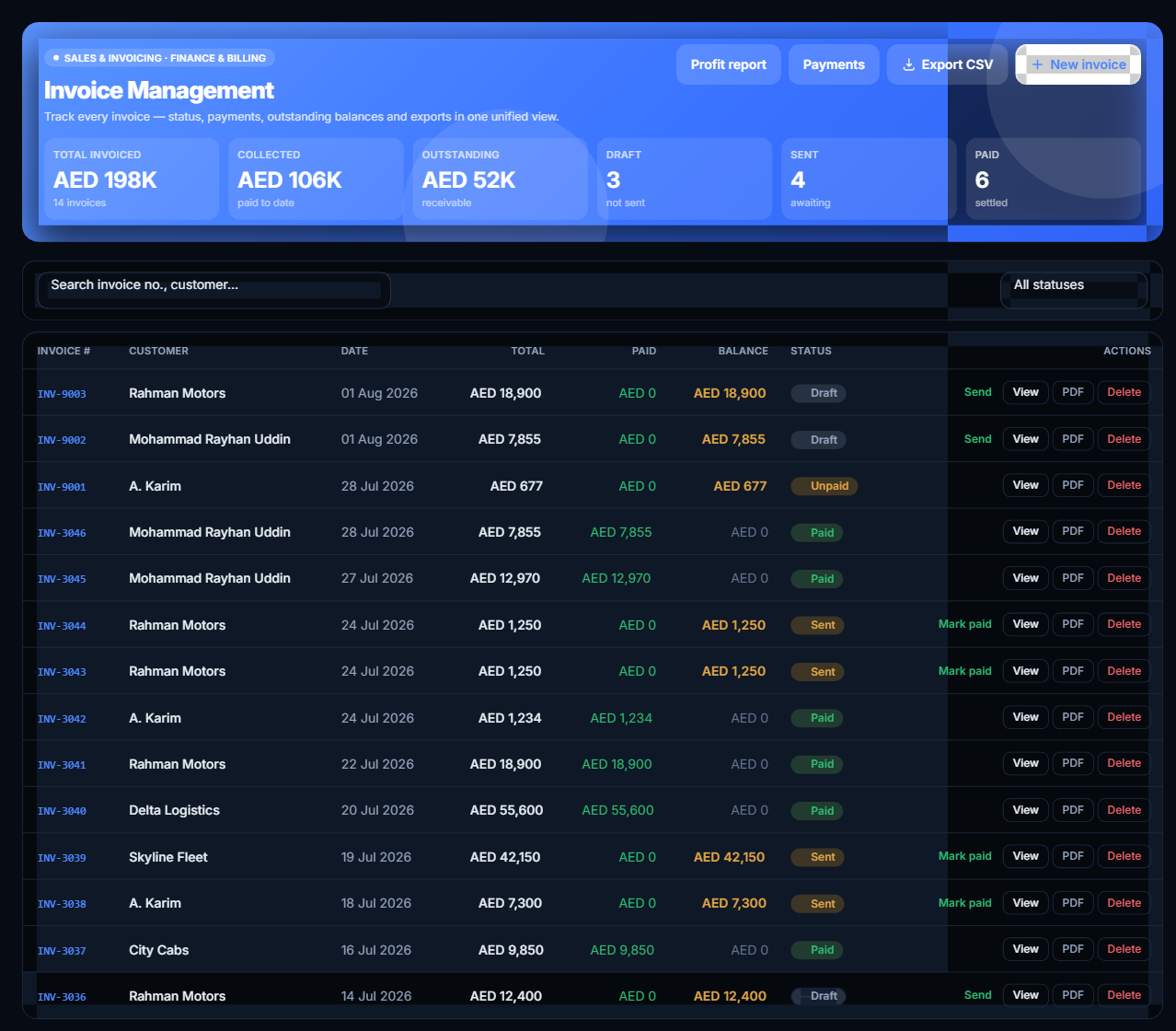
We cover billing, payments and staying FTA-ready in detail in our VAT invoicing guide for UAE workshops.
Stage 8 — The portal that brings drivers back
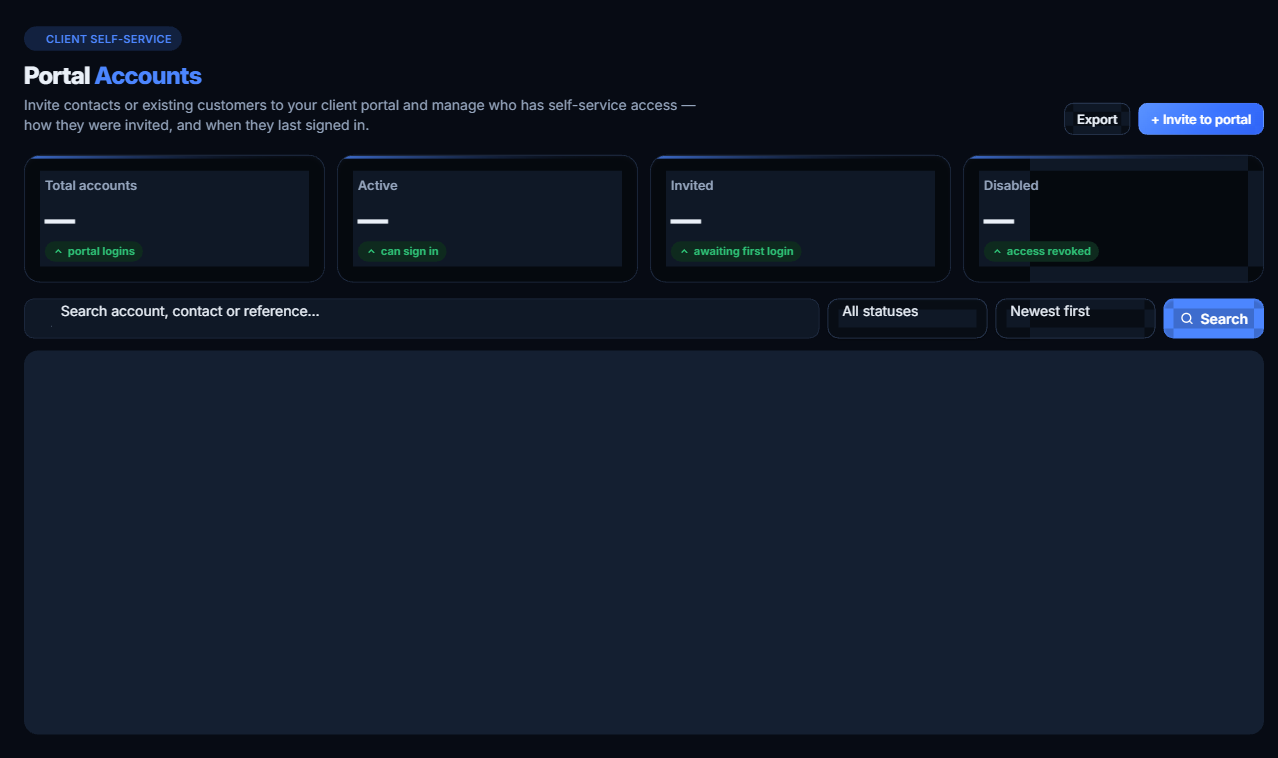
The job doesn't really end when the car leaves — it ends when the customer comes back. A branded customer portal lets drivers track their repair live, approve extra work, and see their full service history in one place. It's the modern equivalent of the service advisor who remembers every customer by name, except it scales to thousands of them and never forgets a vehicle's history.
What changes when the whole shop runs in one place
None of these stages is revolutionary on its own. The power is in the connection: because booking, job cards, inspections, estimates, parts, QC and invoicing all write to the same record, the whole business becomes visible. Log in and you see today's revenue, your gross profit, cash in hand and every car in the bay — not at month-end, but right now.
- Faster turnaround — cars don't wait on lost paperwork or slow approvals.
- Less leakage — every part and labour hour reaches the invoice.
- Live numbers — you manage on today's figures, not last month's guesswork.
- Happier customers — transparent inspections, quick approvals, and a portal they actually like.
How to roll this out without the drama
You don't need to change everything on a Monday. The workshops that switch smoothly follow roughly the same path:
- 1Start with job cards and inspections — the two changes your floor feels immediately.
- 2Import your existing customers and vehicles so history is there from day one.
- 3Train on the floor, not in a classroom — ten minutes on a real car beats an hour of slides.
- 4Go live one bay or one branch first, then roll out once the team is comfortable.
- 5Keep paper as a safety net for the first week — you won't need it past that.
- 6Review your numbers after two weeks: approval times, comebacks, and revenue per job.
Frequently asked questions
How long does it take to get started?
Most workshops are running real digital job cards the same day they sign up. A full switch — importing data, training the team, going fully paperless — typically takes a week or two, done branch by branch.
Will my technicians actually use it?
They use it when it makes their day easier, which is why inspections and job cards are the place to start — a technician would much rather tap photos into a phone than fill in a smudged paper card. Adoption follows usefulness, not mandates.
Is it right for a single-bay workshop?
Yes. The same workflow that keeps a twelve-branch group organised keeps a single-bay independent shop from losing parts, chasing approvals and forgetting to bill. You simply grow into the multi-branch features when you need them.
Is the invoicing VAT-ready for the UAE?
Yes — invoices are VAT-compliant out of the box, with your TRN and 5% VAT applied automatically, and every part and labour hour captured. See the VAT invoicing guide for the detail.
Run your first digital job card today
Start a free 14-day trial — no credit card — and put this playbook to work in your own workshop.
Start free trialWant to go deeper on a specific area? See job card software, digital vehicle inspection software and auto repair invoicing software — or explore the full workflow on our features page and book a live demo.
Run a sharper workshop
Practical tips on growing and modernising your garage — straight to your inbox, no spam.
Keep reading
GuidesDigital Vehicle Inspections: How Photos Win Customer Trust and Speed Up Approvals
Digital vehicle inspections (DVI) turn 'trust me' into 'see for yourself.' Here's how photo inspections build trust, lift approval rates, and get cars back on the road faster.
GuidesChoosing a Customer Booking System for Your Garage: A Practical Guide
A booking system should fill your bays, not create more admin. Here's how to choose one that actually works for a busy workshop — and the features that matter.
UAEGarage Management Software in the UAE: A 2026 Buyer's Guide
Choosing garage management software in the UAE? Here's exactly what to look for — from VAT-ready invoicing to digital inspections — and the questions to ask before you buy.