How to Price an Auto Repair Service to Protect Your Margin
Most workshops don't have a pricing problem — they have a visibility problem. Here's how to price services so you protect margin on every job, backed by real numbers.
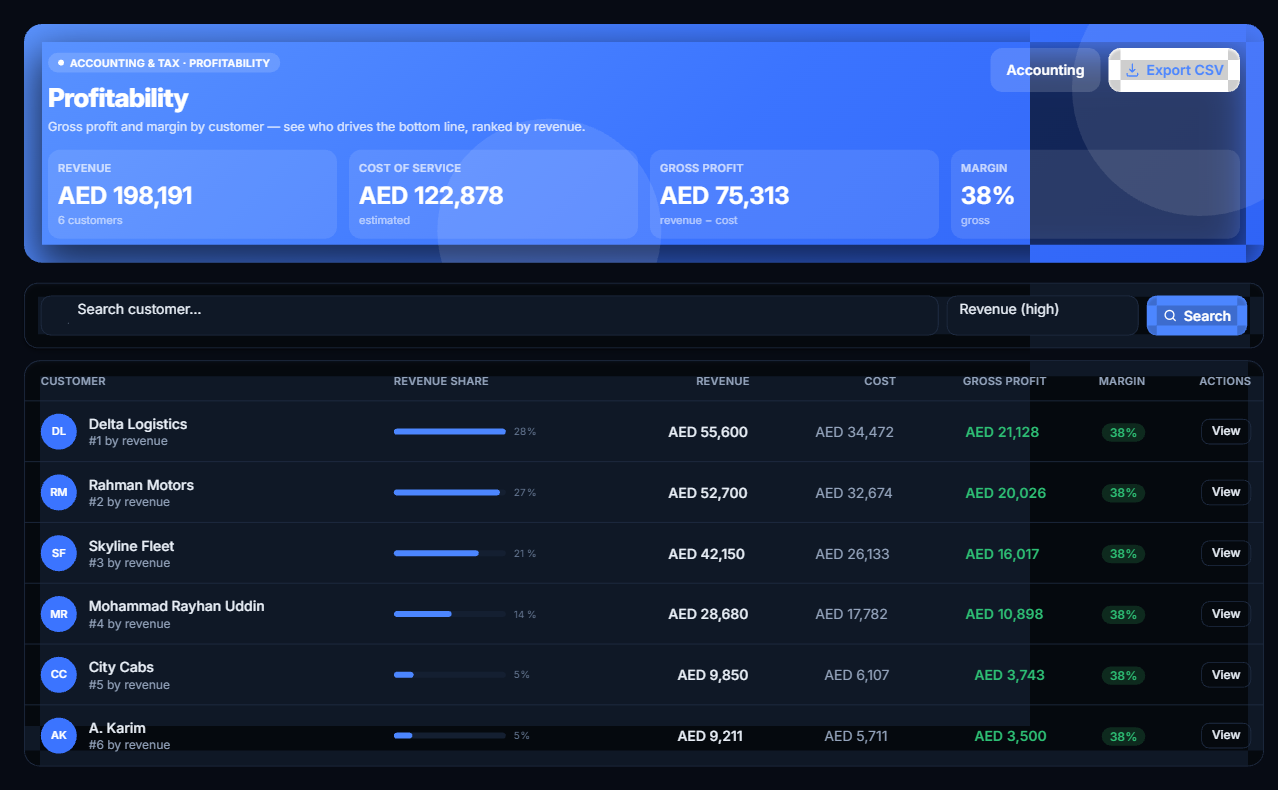
Pricing is the part of running a workshop that keeps owners up at night. Charge too much and you scare customers off; charge too little and you work all month for nothing. But here's the thing we've learned watching hundreds of shops: most workshops don't actually have a pricing problem. They have a visibility problem. They can't see what a job truly costs them, so they price on gut feel — and gut feel leaks margin quietly, one job at a time.
This guide is about fixing that: knowing your real cost, pricing labour and parts with confidence, and using live numbers so no job loses money without you noticing.
Why gut-feel pricing quietly bleeds margin
When you price from memory, you anchor on the sticker — 'a brake job is about AED 600' — and forget everything underneath it: the actual parts cost that week, the diagnostic time, the half-hour the job overran, the comeback that ate an hour of warranty labour. None of it feels significant on the day. Across a month it's the difference between a 40% gross margin and a 25% one. The fix isn't to charge more blindly; it's to see the cost clearly and price on top of it.
Step 1 — Know your true cost per job
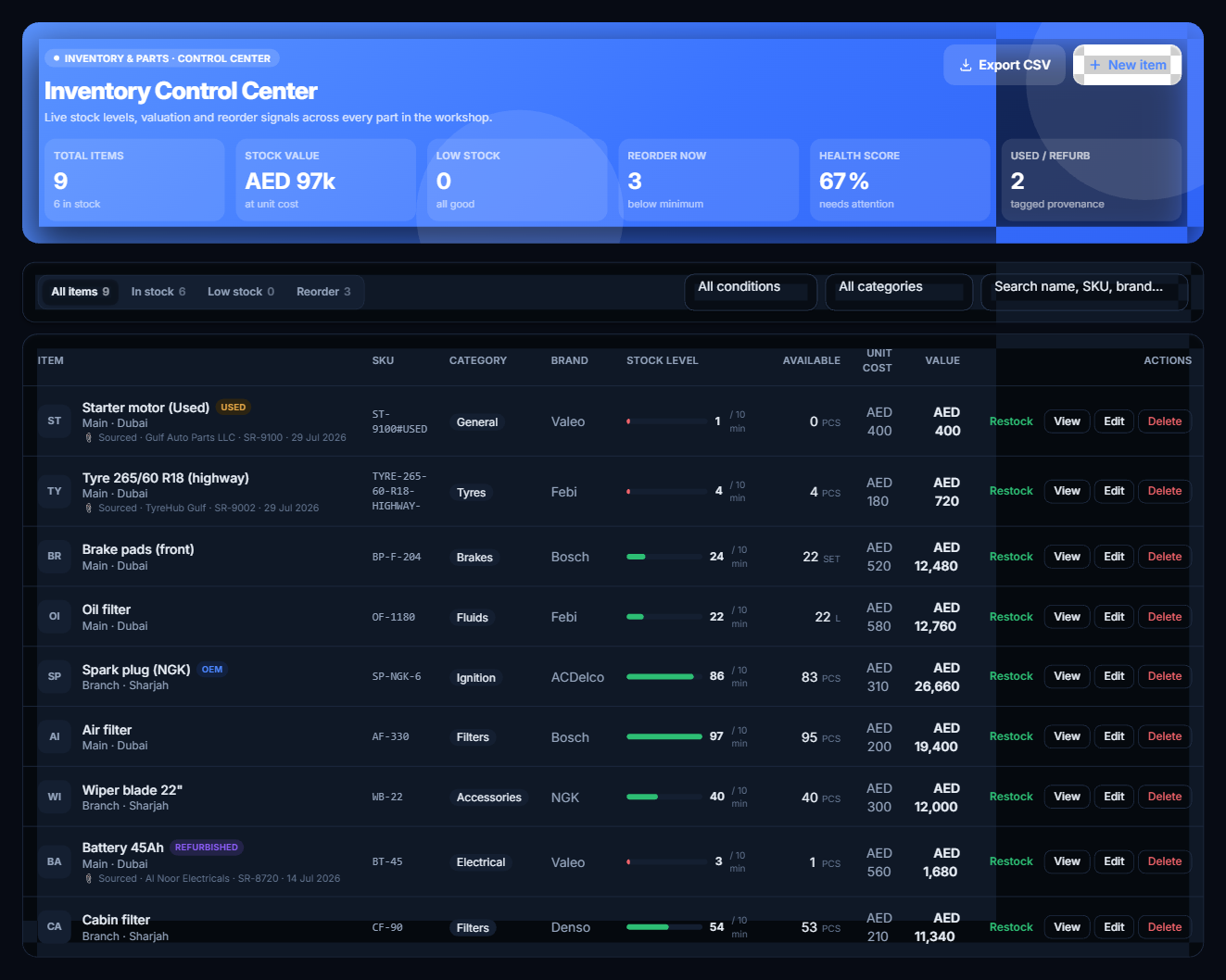
You can't protect a margin you can't see. The foundation is capturing the real cost of every job as it happens — parts at what you actually paid, labour at loaded cost (not just the technician's wage, but the cost of having the bay open). When parts and labour flow onto the repair order automatically, the cost is there without anyone doing extra maths.
Step 2 — Price labour by the hour, honestly
Set a labour rate that covers your loaded cost and the profit you need, then bill the hours the job actually takes. The mistake we see most is quoting a flat price from habit and absorbing every overrun. A proper hourly rate applied to real clocked time protects you on the hard jobs and keeps you honest on the easy ones. If your rate hasn't changed in two years while parts and wages have, that alone is quietly costing you margin.
Step 3 — Mark up parts without hiding it
Parts markup is legitimate — you carry the stock, the warranty and the sourcing risk. The key is consistency, not concealment. A clear line-item estimate that shows the part and its price builds more trust than a vague bundled total, and customers approve it more readily because they can see exactly what they're paying for.
Step 4 — Build estimates customers say yes to
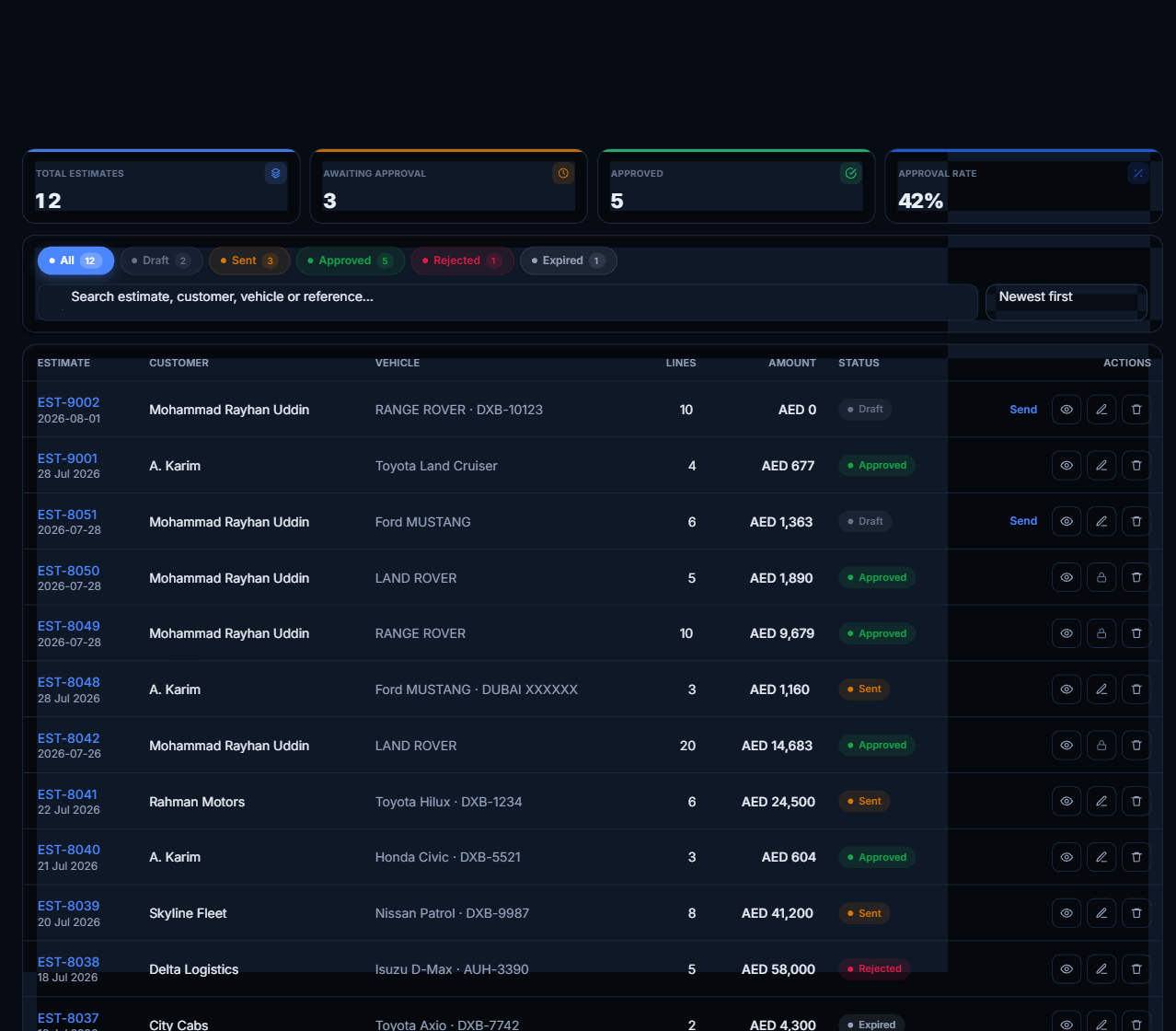
Margin you don't win doesn't count. The estimate is where pricing meets psychology: a photo-backed, line-by-line estimate the customer can approve or decline from their phone gets far higher approval than a number read out over WhatsApp. You protect margin not by hiding the price but by making the value obvious — the photo of the worn pad next to the price of replacing it.
Step 5 — Watch margin per job, not just revenue
Revenue flatters you; margin tells the truth. A shop can be busier than ever and making less, because the extra work is the low-margin kind. When the system shows profit per job — revenue minus real parts and labour cost — you can finally see which work actually pays.
Step 6 — Find your most (and least) profitable work
Once you can see margin, patterns appear. Maybe major services are your quiet earners and a certain cheap job is a loss-leader you should reprice or stop promoting. Sales and performance views turn that from a hunch into a decision — which services to push, which customers are worth the most, and where your bays earn best.
A simple pricing review you can run every month
- 1Check your labour rate against your loaded cost — has anything crept up since you last set it?
- 2Review your ten highest-volume jobs and their real margin, not their sticker price.
- 3Flag any job type running below your target margin and decide: reprice, or stop promoting it.
- 4Look at your slowest-paying customers — margin you don't collect isn't margin.
- 5Pick one service to reprice this month and watch what it does to approvals and profit.
Frequently asked questions
Won't raising prices lose me customers?
A clear, photo-backed estimate loses far fewer customers than an unexplained number. Most price resistance is really trust resistance — show the work and the value, and a fair price sells itself.
How do I know my real margin without an accountant?
When parts cost, labour and the invoice live in one system, profit per job is calculated for you. You don't need to reconstruct it at month-end — it's there on every job.
Is this only for big workshops?
No — a single-bay shop feels margin leaks more sharply, not less. The smaller the operation, the more every under-priced job matters.
Price on facts, not feel
Start a free 14-day trial and see the real margin on your next job — parts, labour and profit in one view.
Start free trialSee how estimates and invoicing protect margin end to end in the complete digital playbook, or explore the numbers side on the features page.
Run a sharper workshop
Practical tips on growing and modernising your garage — straight to your inbox, no spam.
Keep reading
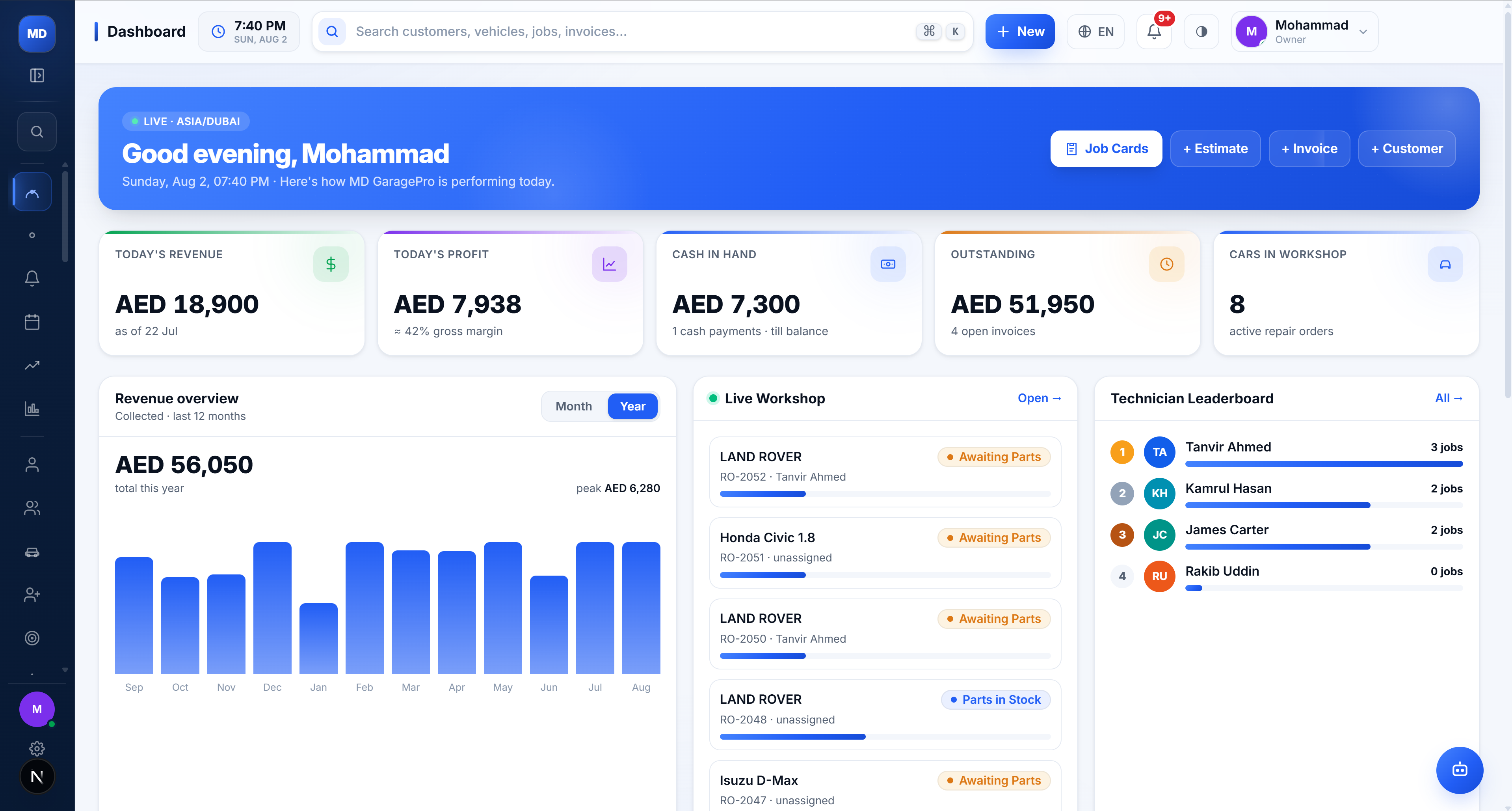 UAE
UAEGarage Management Software in the UAE: A 2026 Buyer's Guide
Choosing garage management software in the UAE? Here's exactly what to look for — from VAT-ready invoicing to digital inspections — and the questions to ask before you buy.
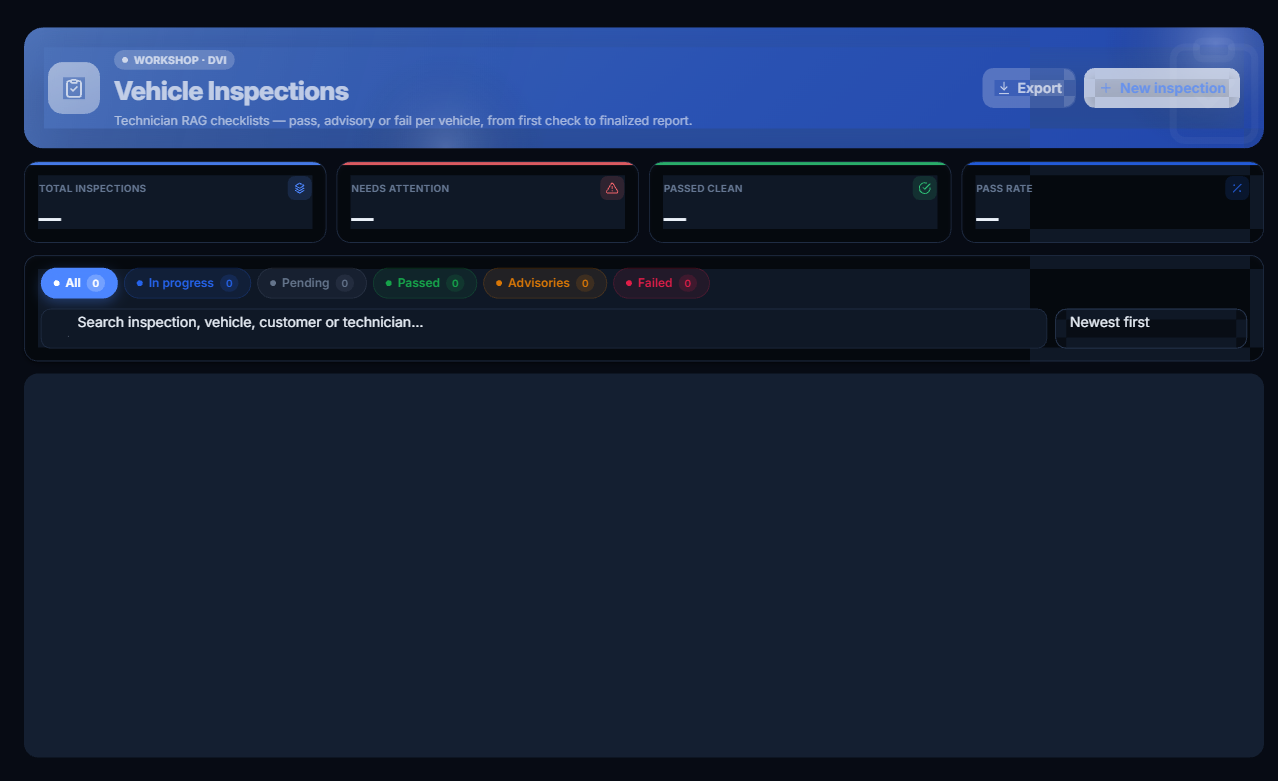 Guides
Digital Vehicle Inspections: How Photos Win Customer Trust and Speed Up Approvals
Digital vehicle inspections (DVI) turn 'trust me' into 'see for yourself.' Here's how photo inspections build trust, lift approval rates, and get cars back on the road faster.
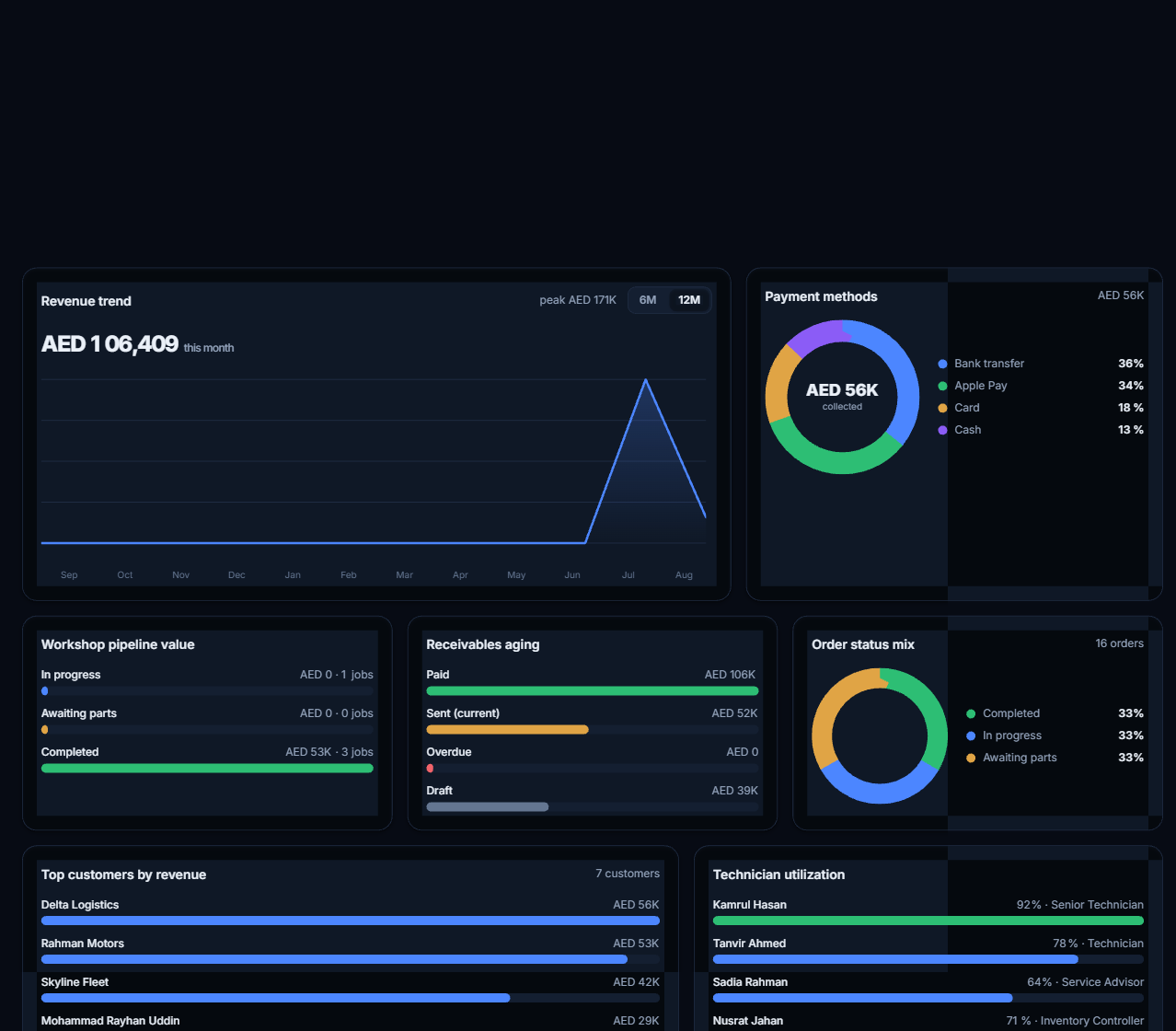 Comparisons
Spreadsheets vs. Garage Software: The Real Cost of Running Your Workshop on Paper
Spreadsheets feel free — until you count the lost jobs, un-billed parts and late nights. Here's the real cost of running a workshop on paper, and what changes when you switch.