Digital Job Cards vs Paper: What Actually Changes on the Workshop Floor
Paper job cards feel free. Here's what they really cost — and exactly what changes, hour by hour, when a workshop moves to digital job cards.
Ask a workshop owner why they still use paper job cards and the answer is almost always the same: they're cheap, everyone knows how to use them, and there's nothing to learn. All true. Paper feels free. The problem is that it isn't — it's just billed in ways that never show up on an invoice: the car that sat an extra day, the part that never got charged, the customer who wasn't called back. This is an honest look at what paper actually costs, and exactly what changes when you switch to digital job cards.
First, the fair case for paper
Let's not pretend paper has no merits. It works when the power's out. A new hire can use it in thirty seconds. It never crashes. For a one-man shop doing three cars a day, paper is genuinely fine. But the moment you have more than one technician, more than a handful of cars in the bay, or an owner who can't be on the floor every minute, the cracks start to show — and they widen fast as you grow.
What paper actually costs
The costs of paper are real; they're just invisible because nobody writes them down. In workshop after workshop, the same leaks appear:
- Lost and smudged cards — a job card rides around on a dashboard and, often enough, disappears. Work stalls while someone reconstructs it.
- No visibility — the only way to know a car's status is to walk over and ask the technician, who is now interrupted.
- Double entry — details are written on the card, then re-typed into an invoice or spreadsheet later, which is where parts and labour quietly fall off.
- No history — last year's work on the same vehicle is in a box somewhere, so you can't see patterns or upsell from history.
- No accountability — when something is missed, there's no record of who did what, when.
What changes in the first hour
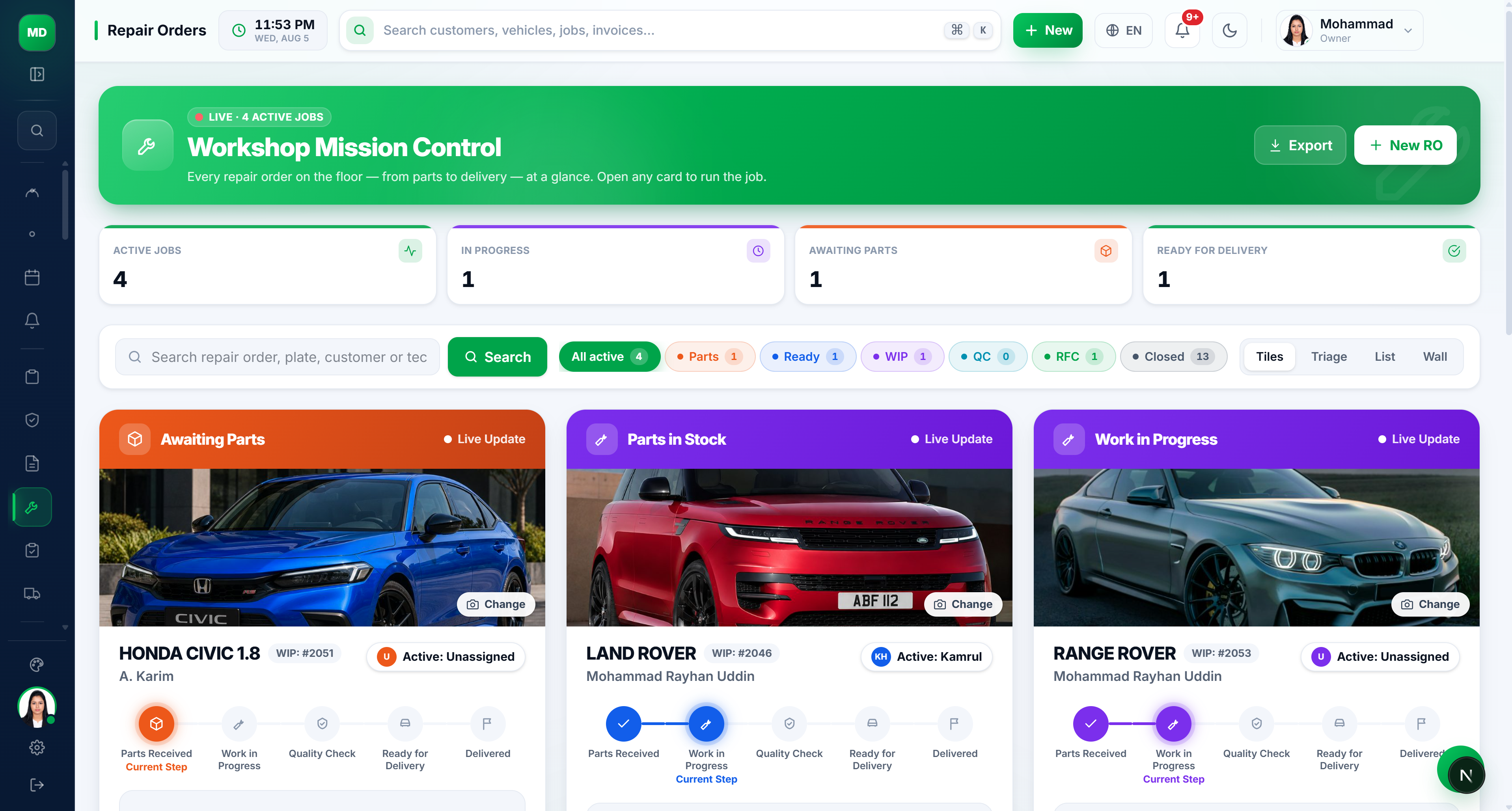
Switch to a live digital board and the very first thing that changes is a question that stops being asked: 'Where's the Land Cruiser?' Instead of walking the floor, anyone — the owner, the advisor, the parts desk — can see every vehicle's exact stage on one screen. Booked, in inspection, awaiting approval, in repair, QC, ready. That single change is what most teams feel within the first hour.
What changes in the first week
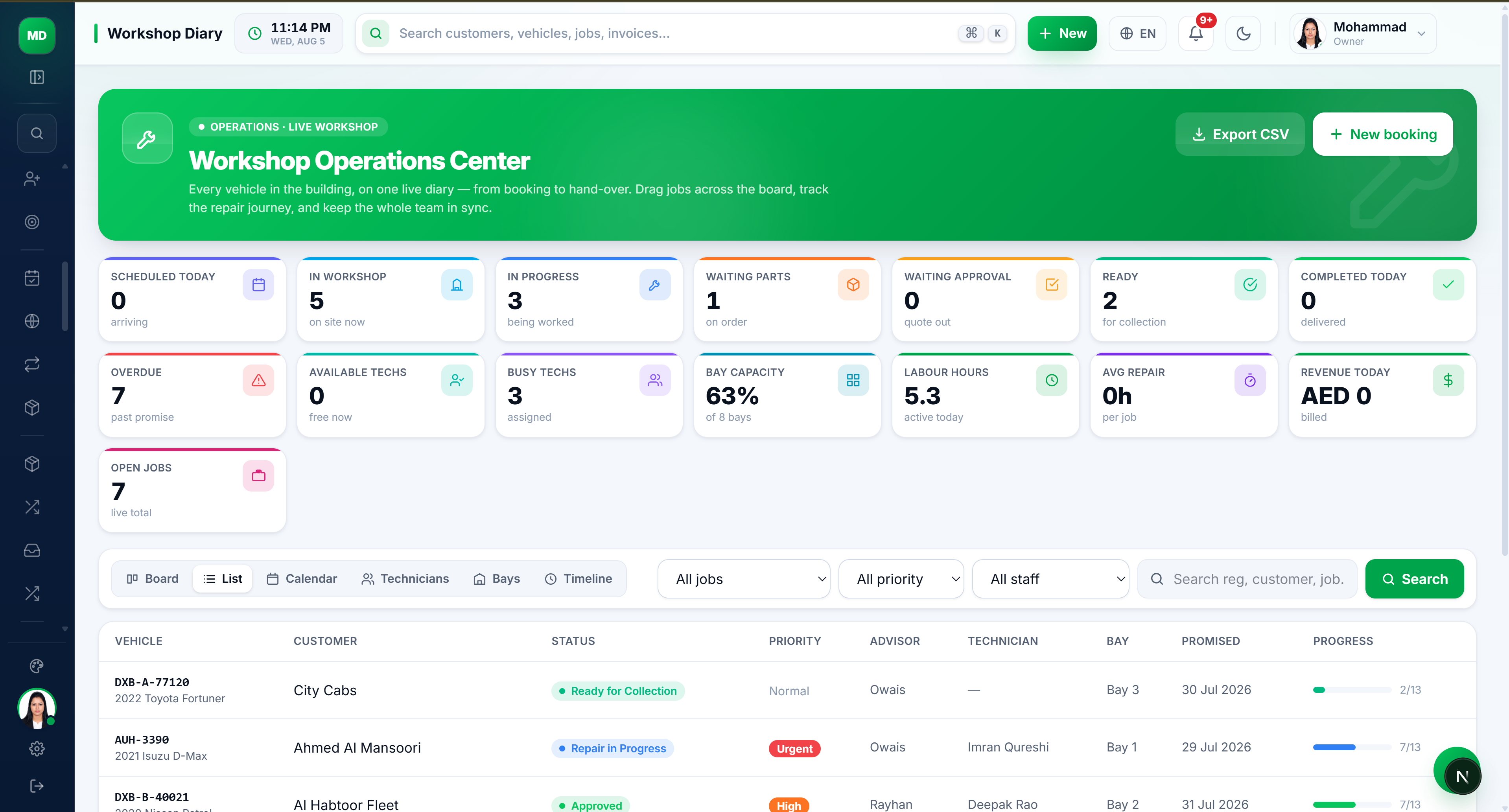
By the end of week one, the flow itself changes. Because a job card can't be lost and its stage is always visible, cars stop sitting idle waiting on a step nobody realised was done. Technicians get assigned deliberately instead of by whoever shouts loudest. And the ops view — a proper workshop diary of everything in progress — means the day is managed on facts, not on memory.
What changes in the first month
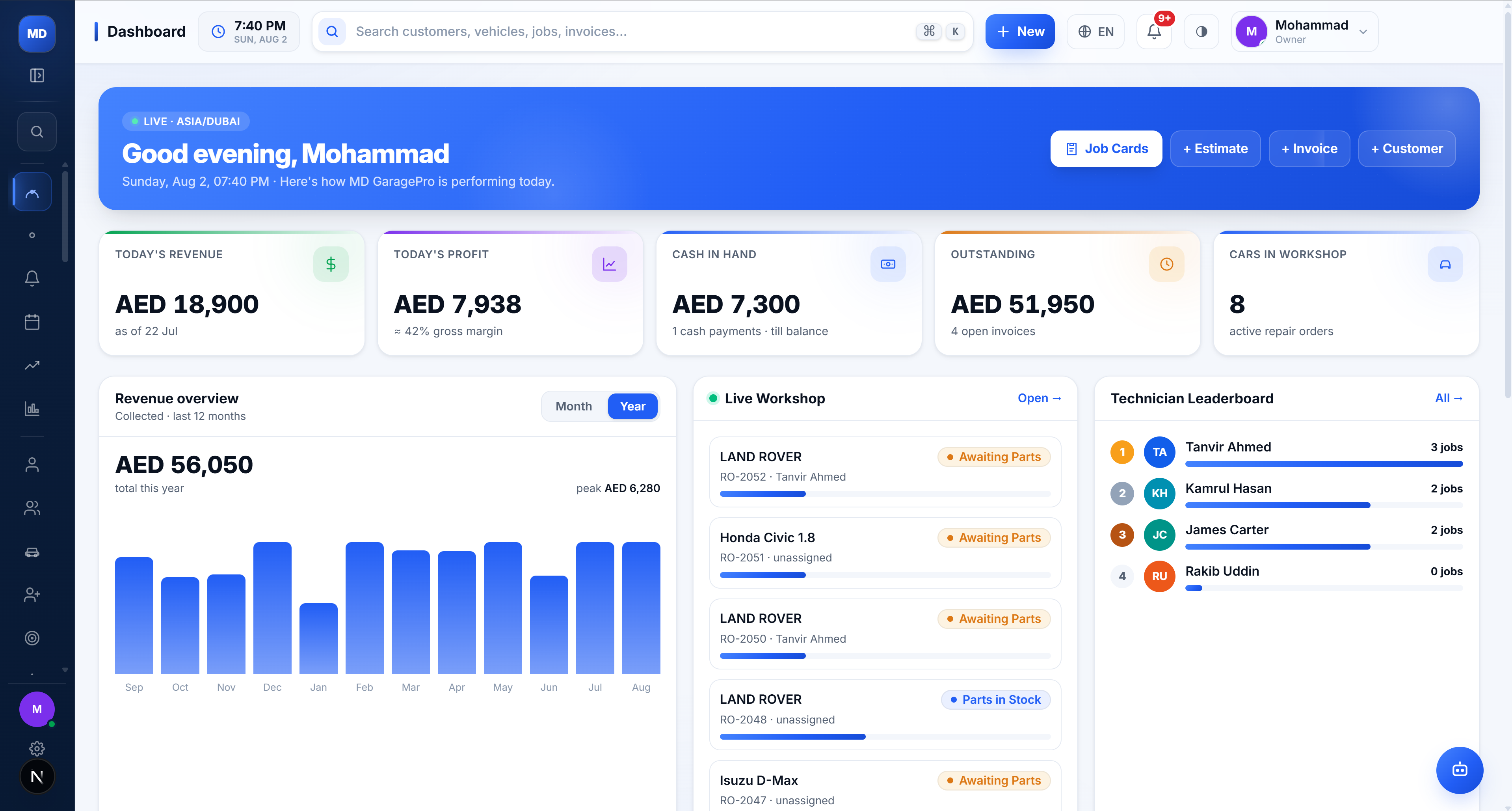
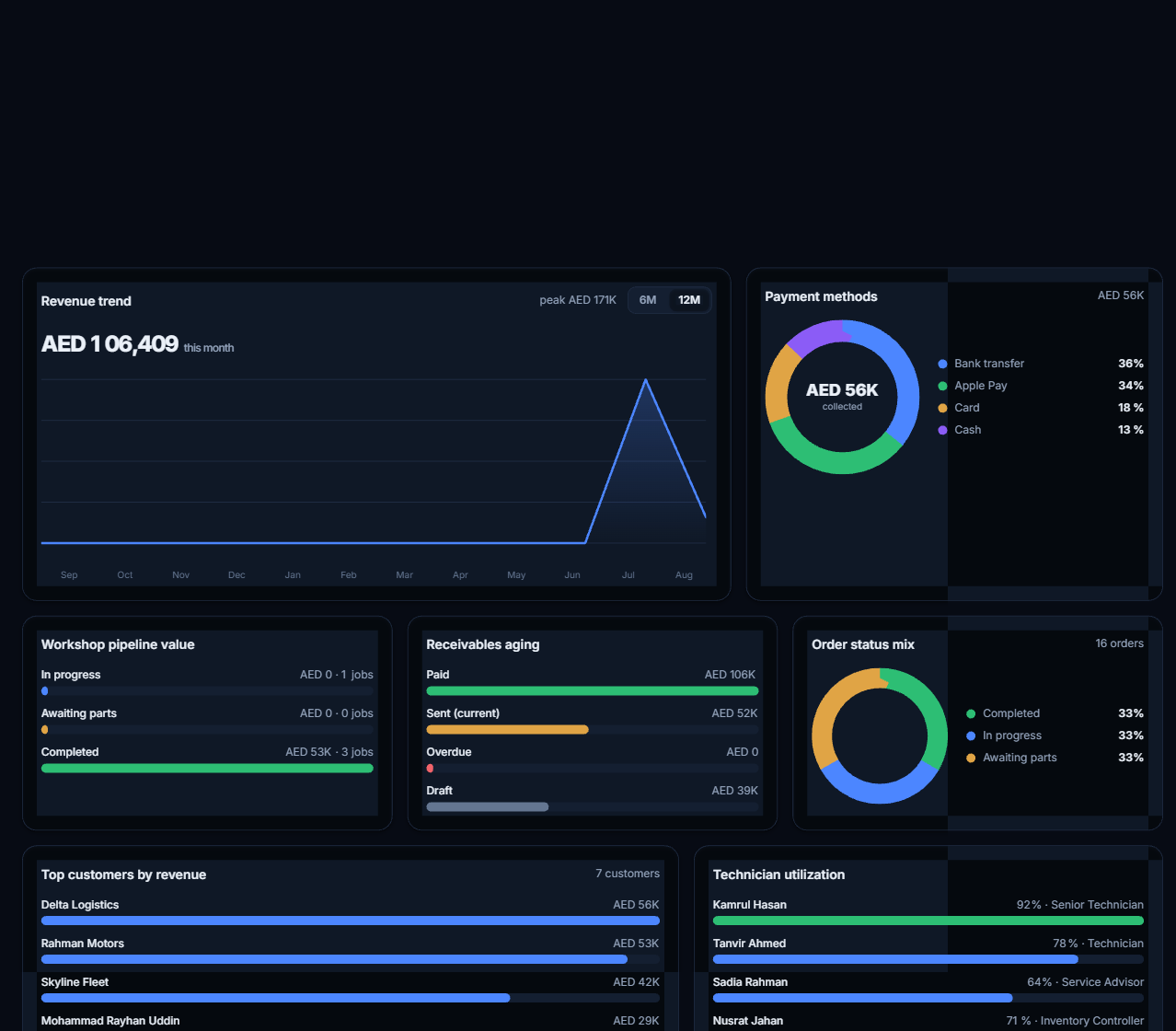
After a month, the change moves from the floor to the office. Because every job wrote to the same record, the numbers are finally real: revenue, profit, cars turned around, jobs per technician — live, not reconstructed at month-end. Owners tell us this is the part they didn't expect. They switched to stop losing job cards, and ended up being able to run the business on today's figures for the first time.
But my team likes paper
This is the real objection, and it's fair. The answer isn't to force it — it's to make the digital version genuinely easier than the card. A technician would rather tap a few photos into a phone than fill in a smudged card by hand, and a service advisor would rather see the whole floor on a screen than chase people. Adoption follows usefulness. Start with the parts of the day that are most painful on paper — the job card and the inspection — and the team pulls the rest along.
The one-car test
You don't have to switch everything to find out. Run one car fully digital tomorrow — book it, open a digital job card, inspect it with photos, send the estimate to the customer's phone, and bill it from the job. One car is enough to feel the difference, and it's how most workshops decide. We break down the full end-to-end flow in the complete digital playbook.
Frequently asked questions
Do digital job cards work offline?
The app runs in any modern browser and is resilient to brief drops, but it's designed for a normal workshop with Wi-Fi. In practice, connectivity is rarely the constraint people expect it to be.
Will it slow my technicians down?
The opposite, once they're used to it — no rewriting cards, no hunting for the last invoice, no re-keying. The few minutes of learning pay back the same day.
Can I still print a job card if I need to?
Yes. Going digital doesn't mean you can never put ink on paper — it means paper is the exception, not the system of record.
Try one car, fully digital
Start a free 14-day trial and run your next job on a digital card — no credit card, set up in minutes.
Start free trialCurious how paper stacks up against spreadsheets too? Read spreadsheets vs. garage software, or see everything on the features page.
Run a sharper workshop
Practical tips on growing and modernising your garage — straight to your inbox, no spam.
Keep reading
 Comparisons
Spreadsheets vs. Garage Software: The Real Cost of Running Your Workshop on Paper
Spreadsheets feel free — until you count the lost jobs, un-billed parts and late nights. Here's the real cost of running a workshop on paper, and what changes when you switch.
UAEGarage Management Software in the UAE: A 2026 Buyer's Guide
Choosing garage management software in the UAE? Here's exactly what to look for — from VAT-ready invoicing to digital inspections — and the questions to ask before you buy.
 Guides
Digital Vehicle Inspections: How Photos Win Customer Trust and Speed Up Approvals
Digital vehicle inspections (DVI) turn 'trust me' into 'see for yourself.' Here's how photo inspections build trust, lift approval rates, and get cars back on the road faster.